


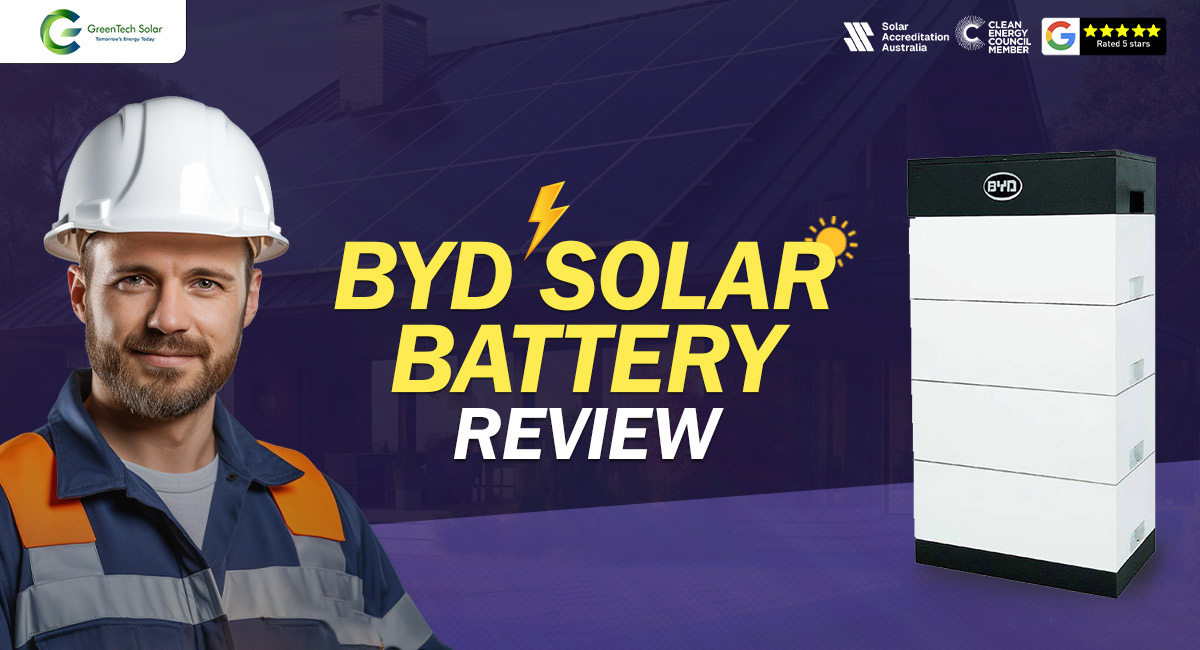
When choosing an energy storage solution for a solar system, understanding how different batteries perform in real homes is critical. The BYD Battery-Box range has become one of the most talked-about solar batteries in Australia, thanks to its strong safety credentials, flexible modular design, and competitive performance. This review breaks down what makes BYD stand out, how it works with solar systems, its pros and cons, warranty details, and whether it’s a good choice for your solar storage needs.
What Is the BYD Solar Battery?
BYD stands for Build Your Dreams, and the company has a long history in battery production. It entered the Australian home storage market with the modular “Battery-Box” range, which includes models with capacities suitable for residential energy storage from about 8 kWh up to around 22 kWh and beyond when stacked. These batteries use lithium iron phosphate (LiFePO₄) chemistry, which is known for strong safety and long cycle life compared with other lithium types.
The Battery-Box design is modular. Installers can stack modules to create the usable capacity needed at a site, and additional modules can be added later if energy needs grow. This modular architecture is increasingly popular because homeowners can start with a smaller battery and expand later without replacing the entire system.
Is a BYD Solar Battery Worth It?
BYD solar batteries offer a strong balance of safety, flexibility, and long-term value for Australian homes. Their modular design allows capacity to grow with household needs, while lithium iron phosphate chemistry prioritises safety and longevity. For homeowners seeking a reliable mid-range battery with broad inverter compatibility, BYD is a practical and future-proof choice.
Technical Overview: Design, Chemistry, and Safety
BYD’s use of lithium iron phosphate (LFP) provides a balance of safety, cycle life, and thermal stability. LFP batteries are less prone to overheating than some other lithium chemistries, making them suitable for Australia’s varied temperature conditions. The modular Battery-Box Premium range can be expanded by adding additional modules, and some configurations can scale to substantial capacities for larger homes or small commercial applications.
Safety certifications such as VDE 2510-50 highlight that these batteries meet some of the strictest international safety standards. A system that complies with such standards inspires confidence for homeowners who prioritise reliability and risk mitigation in energy storage technology.
Performance and Efficiency
A key performance measure for home batteries is round-trip efficiency, which estimates how much energy you get out of the battery compared with what you put in. BYD’s Battery-Box Premium units typically achieve around 95 – 96 per cent round-trip efficiency, which is competitive with many other modular systems. This means you lose only about 4–5 per cent of energy during charge/discharge cycles, which helps maximise usable energy from your solar panels.
The power output of a BYD system depends on the number of modules and the selected inverter. Many homeowners install BYD batteries with hybrid inverters such as Fronius, GoodWe, Sungrow, or Solis, which manage battery charging, solar production, and grid interaction seamlessly. The continuous power that a battery can deliver is often limited by the inverter’s capacity, so matching the battery size to the inverter is essential for optimal performance.
Modularity and Expandability
One of the standout features of BYD batteries is their modular structure. Different versions of the Battery-Box (such as LVS, HVS, and HVM) offer flexibility in how storage capacity can be built up. For example, the HVM model can be expanded in approximately 2.8 kWh steps and scaled up significantly through parallel connections. This makes BYD attractive for homeowners who want flexibility without replacing the entire system later.
The plug-and-play style of stacking modules reduces installation complexity and allows future capacity growth as household energy needs evolve, such as adding an EV or increasing evening energy use.
Integration and Compatibility
BYD Battery-Box systems are designed to work with many popular hybrid inverters on the market. A common pairing, especially in Australia, is with the Fronius GEN24 Plus series of inverters. Such combinations support smart solar usage, load shifting, and even basic backup functionality.
Compatibility with a broad range of inverter brands gives homeowners flexibility in system design, especially when integrating with existing solar infrastructure. Some installers highlight the ease of integration with Fronius in particular, which makes BYD an interesting choice for those already using compatible inverters.
Warranty and Lifespan
BYD batteries come with a 10-year warranty, which is now common in the Australian market. The warranty typically guarantees a minimum of 60 per cent usable capacity at the end of the term or a specified throughput amount. This means that, while the battery will likely continue working beyond 10 years, the portion of energy it can reliably store is guaranteed for that duration.
Actual lifespan and performance depend on usage patterns, depth of discharge, and climate conditions. Systems that are repeatedly cycled heavily (charged and discharged daily) will degrade faster than systems used more conservatively.
Price and Value for Money
BYD solar batteries are generally positioned in the mid-range price segment of the Australian solar battery market. They are not the cheapest option available, but they are often considered good value due to their safety, modular design, and long-term reliability. In Sydney, the approximate installed prices for BYD Battery-Box systems typically fall within the following ranges, depending on capacity, inverter compatibility, and installation complexity:
| BYD Battery Capacity | Approximate Installed Price (Sydney) |
| 10–11 kWh system | A$9,000 – A$11,000 |
| 13–15 kWh system | A$11,000 – A$13,500 |
| 20–22 kWh system | A$14,000 – A$17,000 |
These figures usually include the battery modules, compatible hybrid inverter or battery inverter, standard installation labour, system commissioning, and monitoring setup. Prices can increase if additional electrical work is required, such as switchboard upgrades, complex cabling runs, or advanced backup configurations.
When compared with other well-known battery brands, BYD systems often come in lower than premium all-in-one batteries, while offering similar warranty periods and strong performance. Their modular architecture also adds value, as homeowners can start with a smaller capacity and expand later without replacing the entire system. This flexibility can reduce upfront costs and improve long-term affordability.
For Sydney households looking for a balance between price, safety, expandability, and compatibility with popular inverters, BYD solar batteries are commonly viewed as a cost-effective long-term investment rather than a short-term budget solution.
Approximate Solar Battery Price Comparison
| Battery Brand | Typical Capacity Range | Approx Installed Price |
| BYD Battery-Box | 10–22 kWh | A$9,000 – A$17,000 |
| Tesla Powerwall | 13.5 kWh | A$13,500 – A$16,000 |
| Sungrow Battery | 9.6–25 kWh | A$10,000 – A$18,000 |
| Alpha ESS Battery | 10–20 kWh | A$9,500 – A$16,500 |
These prices generally include the battery unit, compatible inverter or battery inverter, standard installation labour, system commissioning, and monitoring setup. Final costs may vary depending on site conditions, electrical upgrades, backup configuration, and available rebates at the time of installation.
From a value perspective, BYD batteries typically sit below premium all-in-one systems like Tesla while offering greater flexibility through modular expansion. Compared with Sungrow and Alpha ESS, BYD is often competitively priced and appeals to homeowners who prioritise safety, scalability, and long-term reliability over a closed ecosystem.
Pros and Cons of BYD Solar Batteries
BYD batteries are widely appreciated for their modular expansion capability, strong safety profile, and compatibility with many popular hybrid inverters. The use of lithium iron phosphate chemistry enhances thermal stability and long-term reliability, which is particularly important in Australian conditions.
However, BYD batteries may not suit homeowners looking for an all-in-one, closed ecosystem solution. In very high ambient temperatures, output may reduce slightly to protect battery health, which is something to consider for installations in warmer locations.
Real-World Feedback and Customer Ratings
Across multiple independent review platforms and installer feedback sources, BYD solar batteries consistently receive strong ratings from Australian homeowners. Many users highlight reliable performance, stable charging and discharging behaviour, and overall satisfaction with daily energy storage and backup capabilities.
Real-world experiences often point to the flexibility of BYD’s modular design, allowing households to expand capacity over time as energy needs grow. Users also report smooth integration with widely used hybrid inverters and effective utilisation of stored solar energy during evening and nighttime hours. These practical outcomes help explain why BYD solar batteries continue to gain popularity among solar adopters across Australia.
BYD Compared to Other Solar Batteries
Compared with other well-known brands in Australia, BYD sits somewhere in the middle of the market in terms of pricing but performs strongly on reliability and modular flexibility. Premium options like Tesla may command a higher price with similar warranty terms, while some mid-range competitors may trade a bit of performance or modularity for lower upfront cost.
BYD’s broad inverter compatibility also gives it an edge over some competitors that require more limited ecosystems, making BYD suitable for both new solar installations and retrofits on existing systems.
Who Should Consider a BYD Solar Battery?
BYD batteries are a good fit for homeowners who want a safe, modular, and mid-range storage solution without paying a premium for top-tier brands. The ability to expand storage over time also makes BYD attractive for families whose energy usage may grow, such as households planning EV charging or increasing evening electricity use.
Those who prioritise the longest available warranties or the highest operating temperature range may consider alternatives, but BYD’s combination of safety standards, modular design, and performance makes it a strong candidate for many Australian homes.
Frequently Asked Questions About BYD Solar Batteries
Many homeowners ask whether BYD batteries can be expanded later. The answer is yes – most BYD Battery-Box systems are designed to be modular, allowing additional capacity to be added as energy needs grow.
Another common question is about maintenance. BYD solar batteries are largely maintenance-free, requiring only system monitoring and occasional installer checks.
Homeowners also ask about compatibility with existing solar systems. BYD batteries work with a wide range of hybrid inverters, making them suitable for both new installations and system upgrades.
Conclusion
The BYD Battery-Box range offers a compelling blend of safety, flexibility, efficiency and real-world reliability. Its modular design means you can tailor storage capacity to your needs and expand later as required. With strong customer feedback, broad inverter compatibility, and a solid warranty, BYD stands out in the crowded market of solar batteries. If you’re considering adding energy storage to your solar system in Sydney or elsewhere in Australia, BYD is certainly worth including in your shortlist of options. Talking to an experienced installer will help you identify which model and configuration matches your energy goals and budget.
Read the Next Blog: 20kW Solar Battery Price in Sydney